Maybach
A German luxury marque with roots in engine manufacturing, Maybach connects the coachbuilt cars of Friedrichshafen with the revived 57 and 62 and the later Mercedes-Maybach brand.
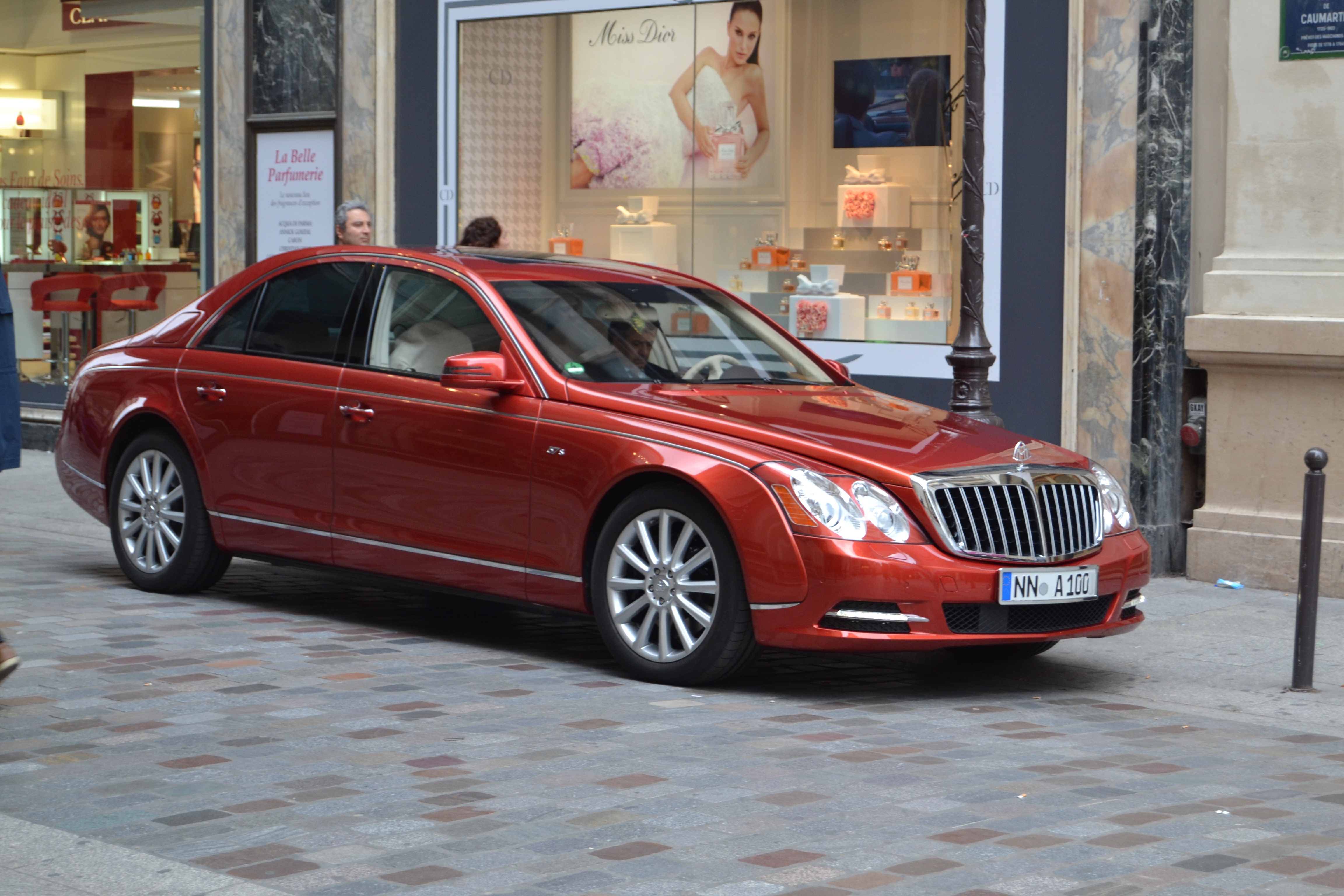

Maybach
Maybach is a German luxury-car marque whose history encompasses several distinct businesses and production periods. The original Maybach-Motorenbau company built engines and prestigious passenger-car chassis in Friedrichshafen. DaimlerChrysler revived the automotive name in 2002 with the Maybach 57 and 62; Mercedes-Maybach subsequently became a luxury sub-brand of Mercedes-Benz in 2014. These phases share a name and heritage, but do not represent uninterrupted passenger-car production. See the Mercedes-Benz historical overview.
This manufacturer-level record belongs in the manufacturers and marques directory. Its relationship with Mercedes-Benz is central to its later history.
From airship engines to automobiles
The company’s origins lie in Luftfahrzeug-Motorenbau GmbH, established in Bissingen in 1909 to develop airship engines. Wilhelm Maybach brought experience from his work with Gottlieb Daimler, while his son Karl assumed technical leadership. The enterprise moved to Friedrichshafen in 1912 and adopted the Maybach-Motorenbau name in 1918. The company’s founding date therefore predates its passenger-car programme. Mercedes-Benz Group biography of Wilhelm Maybach.
The W 3 was presented at the Berlin Motor Show in 1921. This public debut should be distinguished from the beginning of automobile manufacture dated to 1922 in the Mercedes-Benz Group biography. The German Patent and Trade Mark Office places the move into cars in the context of the company’s search for new work after the First World War. DPMA history.
Coachbuilt luxury and engineering development
Maybach’s prewar cars combined the company’s engines and chassis with bodies supplied by specialist coachbuilders. Hermann Spohn of Ravensburg was among those firms. Consequently, a chassis designation alone does not identify a single standard body design: the coachbuilder and individual commission are important parts of a surviving car’s identity. DPMA history.
The W 3 established a six-cylinder foundation. Subsequent six-cylinder cars included the W 5, W 6 and DSH, while the Maybach 12 introduced a twelve-cylinder branch in 1929. The Zeppelin DS 7 and DS 8 became prominent expressions of the marque’s luxury ambitions. From 1935, the SW family—SW 35, SW 38 and SW 42—marked another stage in chassis development through its swing-axle construction. These names identify different models and engineering programmes, rather than interchangeable specifications for a single Maybach automobile. Museum for Historical Maybach Vehicles.
Sources differ over the endpoint of this passenger-car period. The Maybach museum dates the end of automobile production to 1940, whereas the DPMA account gives 1941. This record retains that disagreement rather than assigning an unsupported precise final production date.
Wartime and the interruption of car production
Maybach’s industrial history extended beyond luxury cars. Its wartime activities included tank engines, and after 1945 the company returned to large-engine manufacture without resuming its original passenger-car programme. The DPMA dates Daimler-Benz’s takeover to 1960 and the company’s incorporation into MTU Friedrichshafen to 1969. The later revival of the automotive badge should therefore be separated from the continuing history of the engine business. DPMA history.
The Maybach 57 and 62 revival
DaimlerChrysler relaunched Maybach as an automotive marque in 2002. Its contemporary annual report records public presentations of the 62 in New York and the 57 in Paris, with customer deliveries beginning late that year. Production took place at the Maybach manufacturing operation within the Sindelfingen plant, combining industrial technology with extensive hand finishing and individual customer specification. DaimlerChrysler Annual Report 2002, page 24.
The 57 and longer 62 belonged to the 240 series. Both initially used 5.5-litre V12 engines; the later 57 S and 62 S used 6.0-litre V12 engines. The range also included Zeppelin editions and the Landaulet, which expanded the body-style offering in 2008. These distinctions matter: engine capacity and equipment from an S derivative should not be applied to every 57 or 62. Mercedes-Benz model history.
Auto Zeitung dates manufacture of the revived saloons to 2002–2012, while Mercedes-Benz’s Austrian history records deliveries through 2013. Production dates and the subsequent sales or delivery period are therefore kept separate. Auto Zeitung marque history; Mercedes-Benz historical overview.
Mercedes-Maybach and the marque’s legacy
The next phase began with Mercedes-Maybach’s establishment as a Mercedes-Benz sub-brand in 2014. The 222-series Mercedes-Maybach S-Class premiered that November, with market introduction following in 2015. This was a new product programme within the Mercedes-Benz range, distinct from the preceding 240-series Maybach 57 and 62. Mercedes-Benz model history; Mercedes-Benz historical overview.
Maybach’s historical significance lies in the connection between specialist engine engineering and exceptionally costly, individually specified motor cars. Its revival also illustrates how an established automotive name can acquire a new role within a larger manufacturer’s portfolio. Bentley provides a relevant parallel within this site’s luxury-manufacturer records, while Mercedes-Benz supplies the essential corporate and technical context for the modern Maybach story.
Sources and image credit
- Mercedes-Benz Group — Wilhelm Maybach: company origins, relocation and early automobile manufacture.
- German Patent and Trade Mark Office — Wilhelm Maybach: coachbuilding, wartime activity and postwar corporate history.
- Museum for Historical Maybach Vehicles — Maybach automobiles: model development and the museum’s 1940 production endpoint.
- DaimlerChrysler Annual Report 2002, page 24 — contemporary account of the relaunch, deliveries and Sindelfingen manufacture.
- Mercedes-Benz USA — The new Mercedes-Maybach S-Class: historical sections on the 240 and 222 series.
- Mercedes-Benz Österreich — Mercedes-Maybach: deliveries through 2013 and the subsequent sub-brand.
- Auto Zeitung — Maybach: production period of the revived 57 and 62.
- Matthias v.d. Elbe — Maybach-57-Printemps.jpg, Wikimedia Commons; photograph licensed CC BY 3.0.